5 min read ResuFit Team
Crafting the Perfect Pilot Cover Letter: A Comprehensive Guide
Job Application Materials
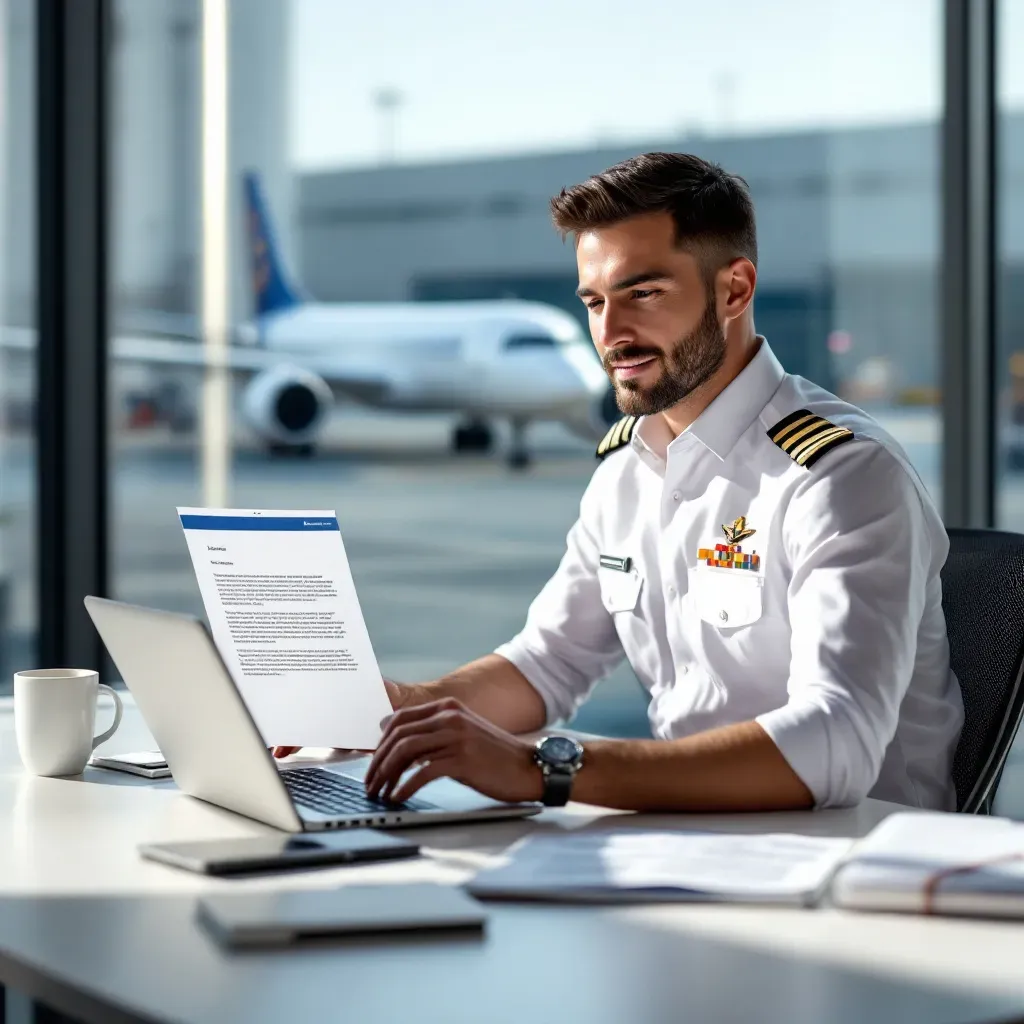
In the competitive aviation industry, your pilot cover letter serves as your first impression with potential employers. A well-crafted cover letter can significantly increase your chances of landing an interview, while a poor one might ground your application before takeoff. This guide will help you navigate the essentials of creating a standout pilot cover letter that showcases your qualifications effectively.
Every pilot cover letter should follow a clear, professional structure that adheres to industry standards:
“Your cover letter should mirror the professionalism you bring to the cockpit,” notes aviation recruitment experts at Enhancv. Proper formatting demonstrates attention to detail—a critical trait for any pilot.
Your opening paragraph should immediately highlight your most relevant qualifications. For example:
“With 4,500+ flight hours, including 2,000 hours in Boeing 737NG aircraft and an ATP certification, I am eager to contribute to Delta Airlines’ commitment to operational excellence and passenger safety.”
This approach immediately establishes your credentials and shows you’ve researched the company’s values.
To demonstrate industry expertise, your aviation cover letter must include relevant terminology and certifications:
When discussing your experience, use specific metrics that demonstrate your value:
“Implemented fuel conservation techniques that reduced consumption by 12% while maintaining on-time performance above 97% across 850+ flights.”
This approach shows both technical expertise and business awareness—qualities airlines actively seek in pilots.
Different aviation employers value different aspects of pilot experience. Tailoring your approach is essential:
When applying internationally, research regional aviation market differences. As noted by Airhead, “Asian carriers often place higher emphasis on hierarchical respect and team harmony, while North American airlines typically focus more on individual decision-making capabilities.”
Using an AI cover letter writer can help you customize your application for different markets, but make sure to review and personalize any generated content.
Even experienced pilots make these common cover letter errors:
Generic Content: Avoid vague statements like “I’m a dedicated pilot.” Instead, provide specific examples: “Implemented a crew debriefing system that reduced operational errors by 20%.”
Overemphasis on Hours: While flight time matters, don’t neglect soft skills like communication, leadership, and problem-solving abilities.
**Ignoring the “Why”: Failing to explain why you want to work for that specific airline shows a lack of research and genuine interest.
Typos and Errors: Precision matters in aviation—even a single error can suggest carelessness.
Excessive Technical Jargon: Remember that HR professionals may review your application before industry experts. Balance aviation terminology with accessible language.
Using AI prompts when writing a cover letter can help you avoid these pitfalls by providing structured guidance for different sections.
“As a First Officer with 3,200 hours in Airbus A320 family aircraft and a proven track record of operational excellence, I am excited to apply for the Senior Captain position at JetBlue Airways. My commitment to safety, passenger experience, and operational efficiency aligns perfectly with JetBlue’s industry-leading standards.”
“At American Airlines, I led a cross-functional team during our 16-month fleet modernization program, ensuring zero operational downtime during the transition to A320neos. This initiative improved fuel efficiency by 15% while maintaining our 99.7% on-time departure rate. Additionally, I served as a CRM instructor, training 45+ pilots on advanced communication protocols that reduced cockpit communication errors by 30%.”
“I would welcome the opportunity to discuss how my experience with international operations and advanced avionics systems could contribute to United Airlines’ expansion into trans-Pacific routes. Thank you for considering my application. I look forward to the possibility of joining your exceptional team.”
Using ResuFit‘s specialized tools for aviation professionals can help you craft these sections efficiently while ensuring they’re optimized for airline Applicant Tracking Systems (ATS).
A well-crafted pilot cover letter demonstrates both your technical qualifications and your professionalism. By following these guidelines and customizing your approach for different aviation employers, you’ll significantly increase your chances of landing that coveted interview.
Remember that your cover letter complements your resume—it shouldn’t simply repeat the same information. Instead, use it to tell the story behind your qualifications and explain why you’re not just a qualified pilot, but the right pilot for that specific position.
With ResuFit‘s specialized aviation templates and AI job application tools, you can create a compelling pilot cover letter that helps your application soar above the competition.
Get the latest tips on resume writing and career advice.