6 min read Tanja
1 in 3 Hiring Managers Has Already Interviewed a Deepfake: What to Do
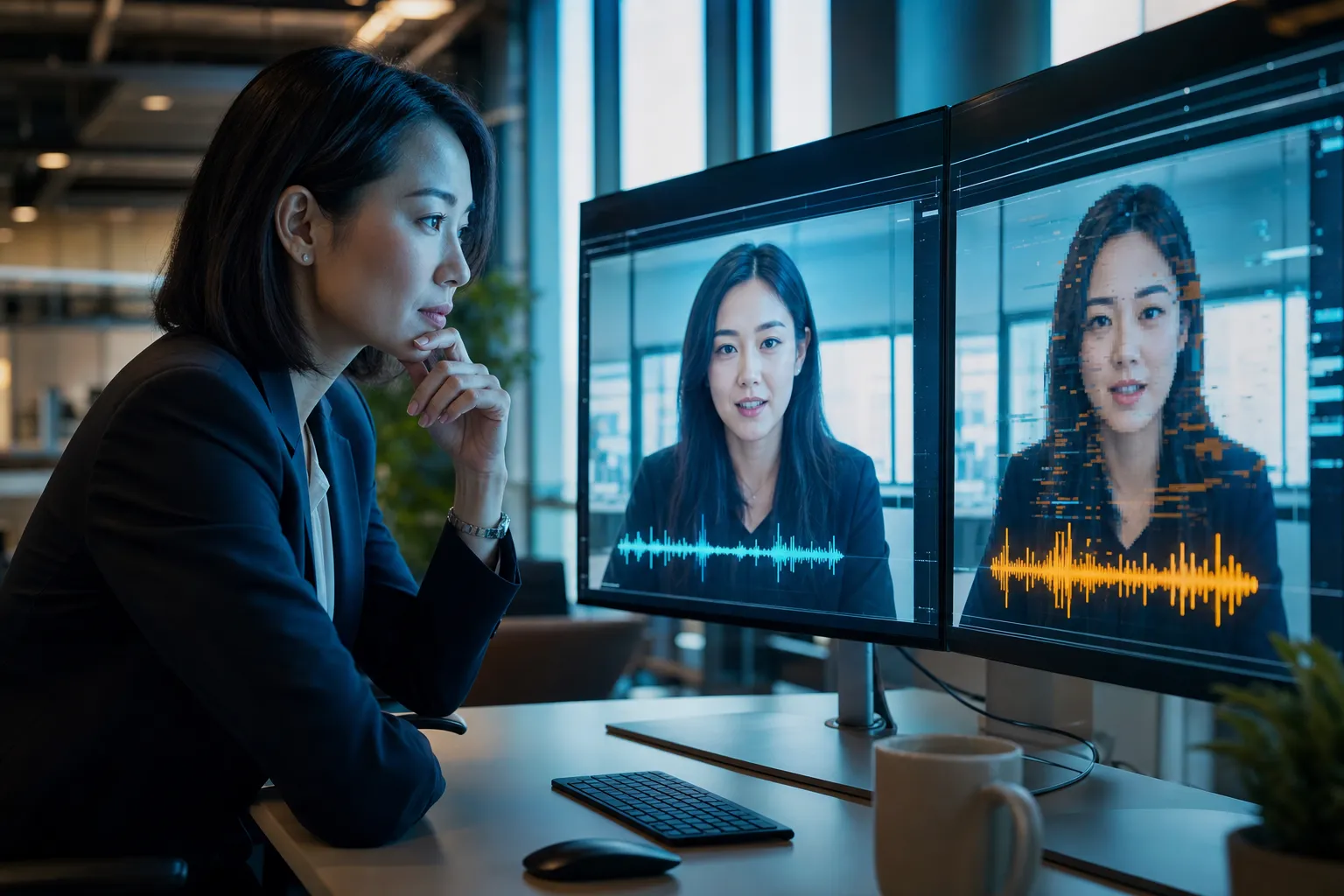
1 in 3 hiring managers has already interviewed a suspected deepfake candidate. That is not a future scenario. It is happening in your industry, possibly in your pipeline right now.
Direct Answer: According to Greenhouse’s 2025 Hiring Trends Report (N=4,136), 1 in 3 hiring managers has encountered a suspected or confirmed deepfake candidate in a job interview. Detecting them requires specific behavioral checks during video interviews, resume inconsistency analysis, and a structured identity verification process.
The technology enabling this fraud has outpaced most hiring workflows. The Pindrop 2025 Voice Intelligence and Security Report recorded a +1,300% increase in deepfake fraud attempts in 2024 alone. Gartner Research (2024) projects that by 2028, 1 in 4 job applicants globally will be AI-generated or fabricated in some form. This is not a niche threat for tech companies. It is a mainstream hiring risk.
Hiring a fraudulent candidate is not merely an embarrassing mistake. It is a potential data breach.
The FBI’s Internet Crime Complaint Center (FBI IC3 Annual Report 2024) documented cases of North Korean operatives creating entirely synthetic identities: AI-generated profile photos, fabricated work histories, and real-time deepfake video during interviews. They targeted US tech and crypto companies specifically for access to internal systems. Once hired, they harvested credentials and exfiltrated confidential data. The FBI issued a formal advisory in 2024 warning US employers about this pattern.
This is the real cost of hiring fraud. It is not just a bad hire you can exit after 90 days. By then, the damage is done.
Security Magazine (2025) found 41% of organizations have unknowingly hired a fake candidate, and 88% report encountering deepfake or impersonation attacks in their hiring processes. The Experian 2026 Future of Fraud Forecast named deepfake job candidates one of the top emerging fraud threats.
How does your resume score?
Check Your Score FreeMost deepfake tools perform well in static, frontal conditions. They degrade under pressure.
1. The head-turn test. Ask the candidate to turn their head fully to the profile position, then back. Do this mid-conversation, casually. Current deepfake technology struggles with sharp lateral head movements; you will often see warping, pixelation, or a momentary visual glitch around the ears and jaw.
2. Lip-sync lag. A delay of more than roughly 200ms between mouth movement and audio is a strong signal. Watch the corners of the mouth particularly; these are the hardest features for synthesis models to track accurately.
3. Hairline and ear edges. These are the highest-entropy areas of a face and consistently the worst-rendered in generated video. Soft, blurry, or flickering edges around the hairline and ears warrant a closer look.
4. Blinking patterns. Early deepfakes famously did not blink. Modern versions do, but unnaturally: too infrequently, too mechanically, or in bursts. Watch over a two-minute window.
5. The background story. A candidate claiming to work from home who has a perfectly clean, featureless, or digitally replaced background is worth questioning. Ask them to step away from the camera briefly, or to move to another room. Legitimate candidates comply. Deepfake sessions are fragile when asked to break the setup.
A polished resume is not a fraud signal on its own. What matters is inconsistency.
Watch for these patterns. A resume with flawless formatting and keyword optimization, paired with a LinkedIn profile showing zero mutual connections with the claimed employer. Skills listed at senior level that do not hold up in a five-minute technical screen. Employment dates that are suspiciously round (“2019-2022”) with no specifics. A cover letter that reads as generically professional but contains no specific details about the role.
Some candidates openly admit to interview fraud when surveyed — and the actual rate is certainly higher. Admission-based surveys systematically undercount.
Check PDF metadata on submitted documents. Resumes generated by AI tools often show creation timestamps in the hours before submission, author fields set to AI tool names, or inconsistent font embedding. None of these are definitive proof, but they are useful data points.
Build this into your process for any remote hire before extending an offer.
Step 1: Cross-reference the email domain. A Gmail address from a candidate claiming to currently work at a Fortune 500 company needs explanation. Request their work email or verify the company directly.
Step 2: LinkedIn triangulation. Check whether any of your colleagues share connections with the candidate. Zero mutual connections for a senior candidate claiming a decade in your industry is unusual.
Step 3: Live liveness check. During the interview, ask the candidate to hold up a handwritten note with today’s date, or perform an unexpected action (stand up briefly, show you a physical object near their desk). Make it conversational and casual. Deepfake sessions do not handle props well.
Step 4: Reference verification before offer. Call references directly using numbers you find independently, not the ones provided. Ask former managers to verify specific projects by name.
Step 5: Identity verification for sensitive roles. For roles with access to financial systems, customer data, or proprietary code, use a third-party identity verification service such as Persona, Jumio, or Onfido. These cross-check a government-issued ID against a live liveness test. It takes minutes and costs little compared to the alternative.
The Greenhouse statistic deserves to be stated plainly. This survey covered 4,136 hiring professionals across industries in 2025. 1 in 3 had encountered a suspected or confirmed deepfake candidate. That is not a security researcher’s thought experiment. It is the current baseline for hiring at scale.
If you run a team of three recruiters, statistically at least one has already spoken with a fabricated person without knowing it. The question is not whether this will affect your organization. It is whether you have a process to catch it.
Hiring a fraudulent candidate creates legal exposure on two fronts. If the fake employee accesses and leaks customer data, your organization faces breach notification obligations under state privacy laws and, depending on industry, federal regulations. The fact that you were deceived is a mitigating factor, but not a complete defense; regulators look at whether reasonable verification procedures were in place.
There is also an EEOC dimension. If your fraud-detection process inadvertently creates disparate impact on legitimate candidates from particular backgrounds, that is a separate liability. Your verification protocol must be applied consistently and documented.
For the other side of this problem, see our guide on how job seekers can protect themselves from fake recruiters and deepfake job scams.
For real candidates, the answer to this environment is transparency and verifiability, not a more elaborate resume. An ATS-optimized resume built with a tool like ResuFit gives hiring teams something specific to cross-reference: structured skills sections, consistent formatting, and a clear professional narrative that holds up in a technical screen. When every data point on a resume can be validated in conversation, the fraud signals become much easier to spot by contrast.
Ready to build a winning resume?
Create Your Resume FreeGet the latest tips on resume writing and career advice.
Very common and growing fast. A Greenhouse 2025 survey of 4,136 hiring managers found 1 in 3 had already interviewed a suspected or confirmed deepfake candidate. Security Magazine research found 41% of organizations have unknowingly hired a fake candidate.
Ask the candidate to turn their head sharply to the side — most deepfake tools fail on profile views and fast movements. Other signals: lip-sync lag of more than 200ms, pixelation around the hairline and ears, unnatural blinking patterns, and a suspiciously clean or blank background in what should be a home office.
Yes — the FBI has documented multiple cases. North Korean operatives created synthetic identities, used AI-generated profile photos, and passed video interviews (sometimes with real-time deepfakes) to get hired at US tech and crypto companies. Once inside, they harvested credentials and exfiltrated data. The FBI issued a formal advisory in 2024.
Use a tiered approach: first verify the email domain and LinkedIn against company directories. Then request a live 'liveness check' — ask them to hold up a handwritten note with today's date, or perform an unexpected physical action. For sensitive roles, use a third-party identity verification service (Persona, Jumio, or Onfido) that cross-checks government ID against liveness.
Don't accuse — investigate. Pause the process, request an in-person or proctored video session with a neutral third party present. Cross-reference their resume details independently (past employers via LinkedIn, education via NSCHEC). If you've already hired them, involve IT security and legal immediately to assess data access.
Not on its own. Professional resume formatting is a sign of a prepared candidate, not a fraudster. The fraud signal is inconsistency: a highly polished resume paired with a LinkedIn profile that shows no mutual connections with the claimed employer, or skill claims that don't hold up in a technical assessment.