7 min read ResuFit Team
Artist Resume Guide: 5 Sections a Standard Résumé Skips
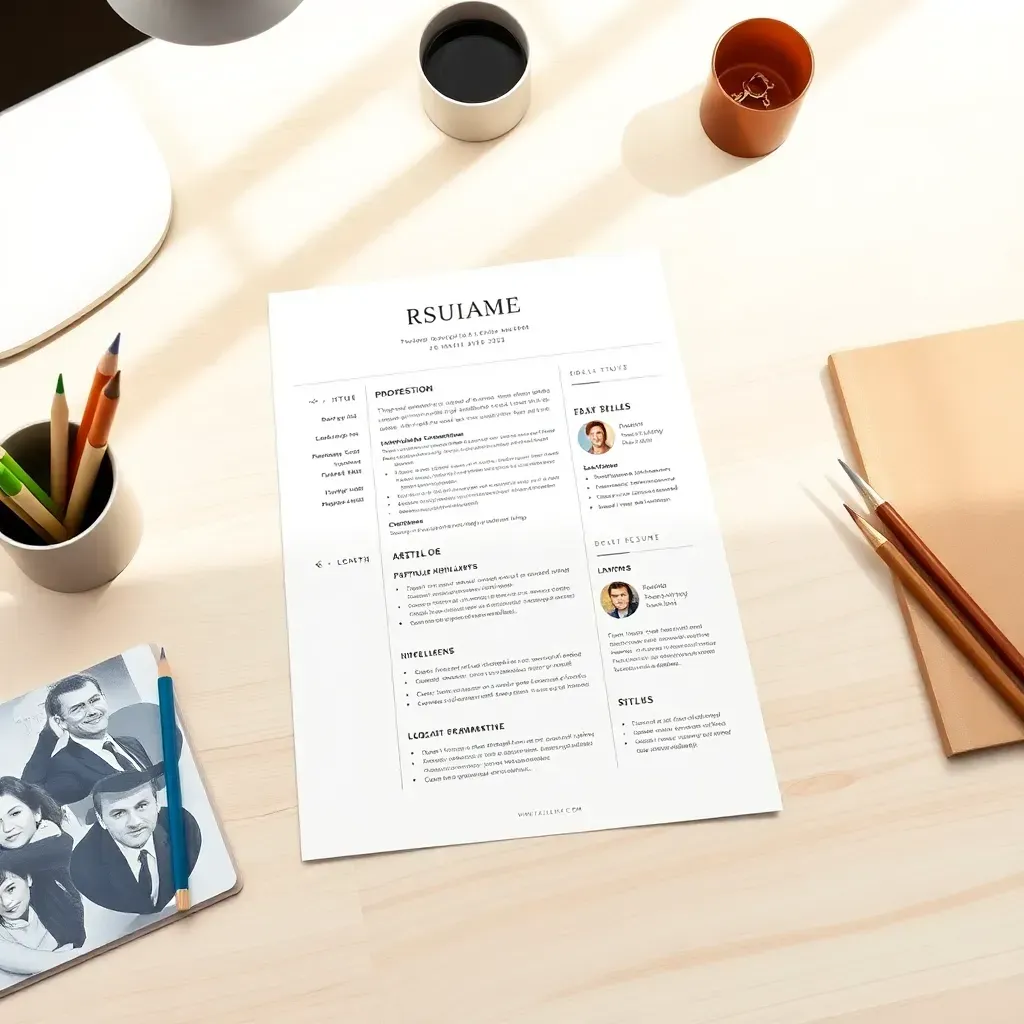
An artist resume is a one- to two-page summary of your creative practice — and it needs five sections a standard résumé doesn’t have: a portfolio link, exhibitions or performances, commissions, residencies and awards, and an artist statement. Get those five right and a gallery, grant panel, or creative employer can size up your work in seconds. ResuFit builds and tailors that document for each opportunity, so the same body of work reads one way for a gallery and another for a studio job.
Direct Answer: An art resume keeps the structure of a normal résumé — contact details, work experience, education — but adds five artist-specific sections (portfolio, exhibitions/performances, commissions, residencies & awards, and an artist statement) and leads with a link to your work.
What you’ll take away:
A template gives you a blank layout. ResuFit tailors your artist resume to each role, gallery, or grant.
An artist resume is the document creative professionals submit for jobs, exhibitions, grants, and residencies. The College Art Association (CAA) draws the line clearly: the artist résumé is “an abbreviated document … often tailored to reflect a specific expertise,” while a CV is the full record of your professional activity. It highlights your work as an artist rather than your employment history.
The practical split: an artist resume is short and tailored to one opportunity, while an artist CV is the complete, ever-growing archive of everything you’ve shown, published, or performed. Build the long CV once; cut it down to a one- or two-page resume each time you apply.
How does your resume score?
Check Your Score FreeA standard résumé sells job titles and metrics. An artist resume sells a body of work, so it adds five sections a standard résumé doesn’t have:
Everything else — contact, selected work experience, education and training — stays. Here is the side-by-side:
| Section | Artistic résumé | Standard résumé |
|---|---|---|
| Contact + title | Name, location, plus your artistic specialty | Name, location, target role |
| Portfolio link | Required, near the top | Rare |
| Exhibitions / performances | Dedicated, reverse-chronological section | Not present |
| Commissions / collections | Listed with client or venue | Folded into “experience” |
| Residencies, grants & awards | Own section | Occasional one-liner |
| Artist statement | 2–4 sentence creative positioning | Replaced by a generic summary |
| Education / training | Degrees, workshops, mentorships | Degrees only |
That table is the difference in one glance — five rows a normal résumé simply doesn’t carry.
Lead with the work and keep the list scannable. A few rules that hold across disciplines:
The goal is a clean resume format that complements your portfolio instead of trying to out-design it.
The five sections stay; the emphasis shifts.
Browsing resume examples across levels helps you see how the same sections re-order for different stages of a career.
A template is a fine starting point — but it’s the five sections above, not the layout, that make a résumé read as an artist’s. Free templates (Google Docs, Canva) work well early on; premium templates mainly buy polish and a tested ATS structure. Pick a clean one, then fill it with your portfolio, exhibitions, and statement. Whatever you start from, tailor the content to each opportunity — that’s the part a template can’t do for you.
In the US and UK, leave the photo off — a photo-free, text-first document reads better to both humans and ATS software. In much of continental Europe, a professional headshot is still standard. Keep it to one page early on, up to two pages once you have a genuine exhibition or performance history. Don’t pad: a tight one-pager beats two pages of filler.
You tailor it — because the show, the grant, and the studio job each reward a different cut of your work. Keep one master version and adapt it per submission: the cut that wins a gallery show isn’t the cut that wins a teaching post.
That’s exactly the manual work ResuFit removes. ResuFit rewrites your resume for every job you apply to — point it at an open call or job description and the AI re-weights your portfolio, exhibitions, and skills for that specific reader. It keeps the output ATS-friendly, works in 5 languages (EN, DE, FR, ES, PT), and is free to start, with per-job AI tailoring at $14.90/month (pricing verified June 2026).
Build your artist resume free and tailor it to your next open call in minutes.
Your artist resume is a preview of your practice, not a brochure. Keep the structure of a standard résumé, add the five sections a standard résumé doesn’t have, and lead with a link to your work. Then start from a clean free resume template and tailor it per opportunity.
Create your artist resume with ResuFit — built for the work, tailored for the room.
How does your resume score?
Check Your Score FreeGet the latest tips on resume writing and career advice.
An artist resume is a one- to two-page summary of your creative practice used to apply for exhibitions, grants, residencies, teaching posts, and creative jobs. It keeps the bones of a standard résumé (contact, experience, education) but leads with your work and adds artist-specific sections. It is an abbreviated document, built once and then tailored to each opportunity.
An artist resume needs the five sections a standard résumé doesn't have: a portfolio link, exhibitions or performances, commissions, residencies and awards, and an artist statement. It still keeps the usual contact, work-experience, and education blocks — the five creative sections are what make it an artist resume rather than a generic one.
It depends on the market. In the US and UK, you leave the photo off an art resume — applicant tracking systems and most employers expect a photo-free, text-first document. In much of continental Europe (Germany, France, Spain) a professional headshot is still common. Match the convention of the country and institution you are applying to.
One page early in your career, up to two pages once you have a real exhibition or performance history. Use a 'Selected' header (e.g., 'Selected Group Exhibitions') to keep a long list focused on the most relevant and recent entries rather than listing everything.
An artist resume is short and tailored to a specific opportunity; an artist CV (curriculum vitae) is a complete, ever-growing record of every exhibition, publication, and credit. Academic and senior gallery applications often ask for the full CV; most jobs and open calls want the tighter resume. Build the long CV once, then cut it down to a resume per application.