8 min read ResuFit Team
What to Wear to a Retail Interview: The One-Level-Up Rule
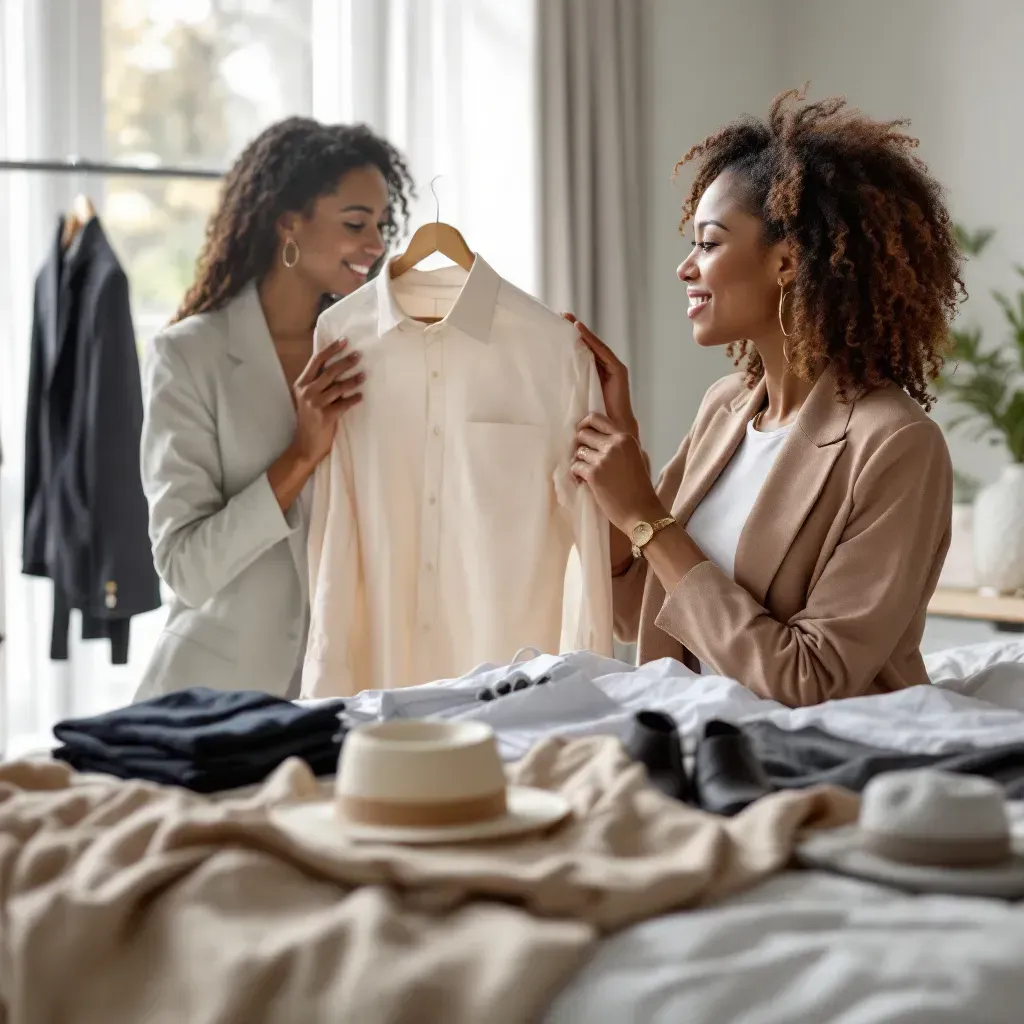
The one-level-up rule answers what to wear to a retail job interview: dress exactly one step more polished than what the store’s own employees wear on the floor. A hiring manager at a luxury boutique expects a tailored suit. One at a casual outdoor retailer expects neat chinos, not a suit. The rule stays constant. Only the baseline moves, and understanding where that baseline sits across the 4 major retail environments is what separates candidates who look like they belong from candidates who guessed.
TL;DR: Research the store’s aesthetic, then apply the one-level-up rule to whichever of the 4 retail environments it falls into: luxury, fashion and apparel, department store, or casual and specialty. ResuFit’s mock interview practice can help you rehearse the answers that go with that outfit, so the whole first impression holds up.
What you’ll take away:
Retail is a visual business. Your attire signals, before you say a word, whether you understand the brand’s aesthetic and its customer. The one-level-up rule exists to answer the question “how dressed up is too dressed up” without needing a different answer for every store.
Here’s how it works: identify what a current employee wears on a normal shift, then add one degree of polish. A cashier at a fashion retailer in dark jeans and a graphic tee becomes an interview candidate in dark jeans and a structured blazer. A luxury sales associate in a blazer and slacks becomes a candidate in a full tailored suit. The floor-level baseline sets the starting point. Your job is to clear it by one step, not by five.
In US markets, that usually lands as business casual, a “polished yet approachable” look combining tailored separates like blazers with dark jeans, according to Indeed. UK retail tends to sit one notch more formal, favoring structured blazers or knee-length skirts with tights.
Before you apply the rule, do the research. Visit the store, browse its website, or check its social media to see how employees actually dress and how the brand presents itself. You cannot go one level up from a baseline you have not observed.
Ready to build a winning resume?
Create Your Resume FreeFour principles apply across every retail environment, regardless of where the floor-level baseline sits:
At upscale retailers like Tiffany & Co. or Nordstrom, the floor-level baseline is already business formal or polished business casual, which pushes one level up into full business formal:
Quality over quantity matters most here. In luxury retail, aim for sophistication and attention to fine details rather than more pieces.
At fashion retailers like Zara, H&M, or Gap, the baseline is trend-aware casual, so one level up means the same vocabulary with sharper execution:
Wearing items from the store itself, without visible logos, demonstrates genuine appreciation for the merchandise and shows you understand their customer.
At retailers like Target, Macy’s, or Marks & Spencer, the baseline is standard business casual, so one level up is a cleaner, more deliberate version of the same:
Department stores serve diverse customer demographics, so a versatile, professional look that works across settings tends to land best.
At bookstores, outdoor retailers, or casual brands like Old Navy, the baseline is neat casual, and one level up still reads as casual, just tighter:
Indeed’s guidelines suggest aiming for “smart casual” here, since going too relaxed erases the one step of polish the rule requires.
| Store type | Floor-level baseline | One-level-up outfit | Common mistake |
|---|---|---|---|
| Luxury (Tiffany & Co., Nordstrom) | Business formal | Tailored suit, minimal jewelry | Wearing trendy pieces instead of quality basics |
| Fashion and apparel (Zara, H&M, Gap) | Trend-aware casual | Dark jeans plus structured blazer | Wearing visible competitor branding |
| Department stores (Target, Macy’s) | Business casual | Pressed pants, blazer or cardigan | Defaulting to an overly casual “safe” outfit |
| Casual and specialty (Old Navy, bookstores) | Neat casual | Polo or blouse, clean khakis | Going too relaxed and erasing the one-level-up step |
The right outfit gets you through the door. Once you’re in the room, behavioral interview questions and tactical interview techniques decide whether you get the offer. Practicing answers out loud, with feedback on how you deliver them, closes that gap. ResuFit’s mock interview practice runs realistic retail interview scenarios so the confidence you built with the right outfit carries through the actual conversation.
The one-level-up rule works because it scales to any retail employer without memorizing separate playbooks. Identify what employees wear on a normal shift, add one step of polish, and check it against the 4 environments above: luxury, fashion, department stores, or casual retail. Get that baseline right, avoid the common mistakes, and your outfit stops being a variable you have to worry about.
Need more interview preparation? Explore our guides on interview questions and answers and basic interview questions and answers for freshers to complete your preparation.
Ready to build a winning resume?
Create Your Resume FreeGet the latest tips on resume writing and career advice.
Follow the one-level-up rule: dress one step more polished than what the store's employees typically wear on the floor. Research the store's aesthetic beforehand, then mirror it with cleaner lines and better fabric.
Dark, non-distressed jeans can work for casual retailers like H&M or Old Navy, since one level up from employee jeans is still jeans, just sharper ones. They are rarely appropriate for luxury or department store interviews, where dress pants or chinos are the safer one-level-up choice.
Yes. Wearing items from the store shows genuine appreciation for the merchandise and demonstrates you understand their customer. Just keep it one level up: no visible logos from competing retailers.
Avoid flip-flops, graphic tees, distressed denim, visible competitor branding, excessive jewelry, and athletic wear or hoodies. Each of these sits at or below employee-floor level, which breaks the one-level-up rule.
Wear business formal attire such as a tailored suit in navy or gray. Luxury retail sets the highest floor-level bar, so one level up means quality over quantity: polished dress shoes, minimal jewelry, and a structured handbag or portfolio.