5 min read ResuFit Team Sponsored
How to Become a Family Nurse Practitioner in 2026: A Step-by-Step Guide
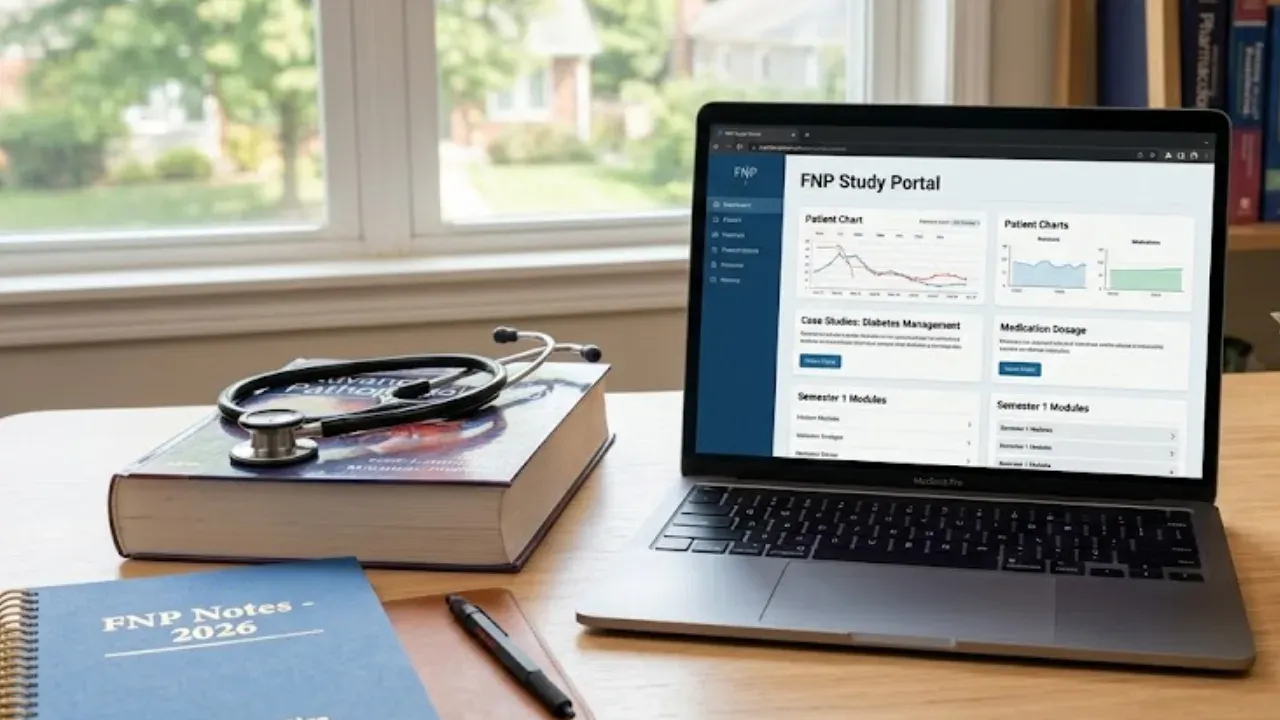
A Master of Science in Nursing, Family Nurse Practitioner (known as MSN-FNP) is a specialized nursing degree that gives students advanced clinical skills and knowledge of applied healthcare techniques across populations and diverse settings, with a focus on family care throughout.
The degree is a tough one, but the job is personally and financially rewarding. It is one of the highest paying nursing roles for entry level positions, with salaries for new graduates starting at around $100,000 in most states. As a degree for people already considerably experienced in professional healthcare, courses are often designed around online study, with clinical hours worked near the student’s locale. This is a step by step overview of how to become an FNP in the US in 2026.
The prerequisites to any Master of Science in Nursing FNP course are a bachelor’s degree in nursing (BSN) and a Registered Nurse (RN) license.
Some states and systems let Associate Degree in Nursing holders become RNs, but you will need a BSN to take on a master’s. There are accelerated courses to help you through this process in just a year, if this applies to you.
The BSN and RN process can itself take years to complete. It will already have given students plenty of supervised clinical experience before they even start the master’s course in specialized family nursing.
This piece has been looking at Master of Science in Nursing FNP degrees primarily. There is another option, but it is less common, and most people who become FNPs take the MSN route. The other path is a Doctor of Nursing Practice, or DNP, a longer path (three to four years) that incorporates more leadership and policy frameworks into the curriculum.
Unless that specialization appeals to you, an MSN-FNP course that is fully accredited will be highly respected by employers as the standard in any state.
Studying an MSN-FNP degree takes two to three years, including at least 500 hours of supervised clinical working hours. Campus-based or hybrid study is definitely still an option, but most universities now offer almost fully online (barring clinical hours) courses designed for RNs to continue working part-time around their advanced qualification.
Once you have decided on the kind of course you want, contacting a reputable MSN FNP provider will be the best way to cover the next steps in detail. That includes clinical placement support and how online courses can be organized around students’ existing nursing commitments.
Family nurse practitioner degrees are practical at their core, teaching how to apply theoretical and research concepts in real-world situations in family dynamics across ages and different populations.
Physical assessments for patients throughout the lifespan, from pediatric to geriatric, are a key part of study. Advanced pharmacology and pathophysiology are the other two core areas.
Other modules will expand on these core principles while looking at different groups of family care patients in primary care settings.
You will then need to demonstrate that you can apply that advanced knowledge in supervised clinical hours working with real patients. Your degree provider will work with you to find clinical placements near you, if the degree is online or hybrid.
Once you have completed your degree and graduated, there is one more step. You have to put all that you have learned into practice with a final national credentialing exam before you can become a practicing FNP.
The two options are the ANCC (American Nurses Credentialing Center) and the AANPCB (American Academy of Nurse Practitioners Certification Board).
For those who have completed an MSN-FNP, the AANPCB is slightly more practical and outpatient care focused, and so will probably suit better. The ANCC leans slightly into the more academic, policy and research side of nursing.
Every state accepts either as a credential for practicing FNPs, and the vast majority of employers will have no preference as you advance your career. So the choice is entirely up to you. Students sometimes look at questions and old papers from both before deciding.
If you wish to start your own practice, which often leads to the highest paying roles, many states will require you to have an Advanced Practice Registered Nurse (APRN) license from their Board of Nursing. This is straightforward once you have the national certification and your degree, and it does not require any extra interviews or real work.
If that all sounds like a lot of work, it is. The total amount of time from college freshman to fully qualified working FNP could be six to eight years or more, depending on your route. Many take some time out between RN qualification and studying a master’s.
However, new graduates can expect to start at around $100,000, and in some states that can go as high as $150,000. The U.S. Bureau of Labor Statistics’ data also says demand for roles is expected to rise 40% over the next decade. So it is a very stable and well paid career by national standards.
Ready to build a winning resume?
Create Your Resume FreeGet the latest tips on resume writing and career advice.